
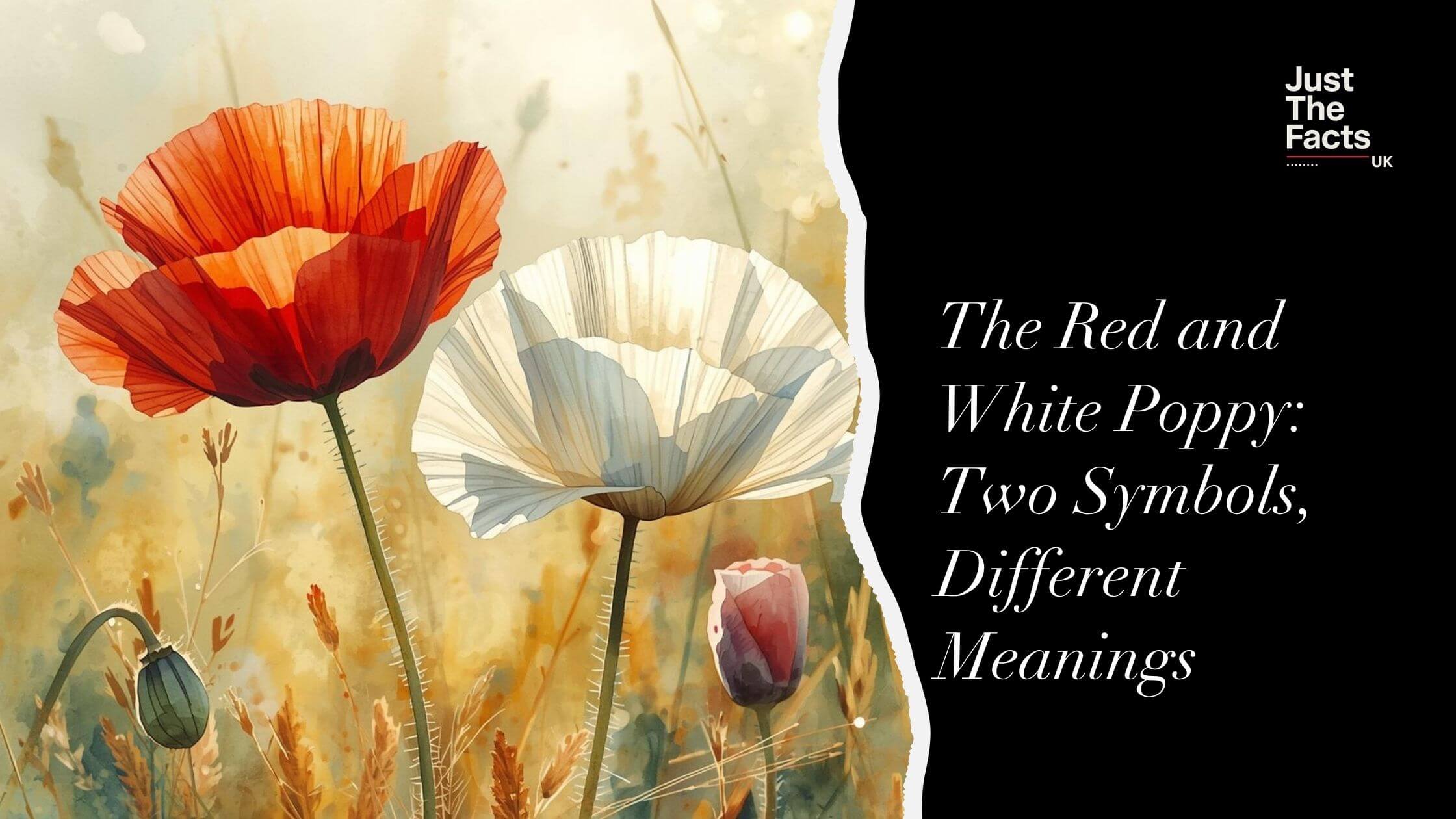
Every November in the UK we see the red lapel-poppy blooming en masse as we approach Remembrance Day (and on Remembrance Sunday) — but we’ll also sometimes spot white ones. What do they each mean? And why does the white one spark a little more debate than the red one? Let’s dive in.
The Red Poppy – tradition, sacrifice, remembrance
The red poppy is perhaps the most widely recognised symbol of remembrance in the UK and across many Commonwealth countries. (Wikipedia)
Origins & Symbolism
- The red poppy’s symbolic use as a remembrance flower traces back to the landscape of the First World War: fields of scarlet poppies grew in devastated trench zones, especially around Flanders. (Imperial War Museums)
- The poem In Flanders Fields (1915) by Canadian physician John McCrae helped cement the poppy’s image as a remembrance emblem. (Imeperial War Museum)
- In the UK, the organisation The Royal British Legion (RBL) distributes the red poppy and uses the proceeds from poppy sales each autumn to support ex-servicemen, women, their families, and others affected by war.
What it is meant to signify
- Primarily: remembrance of the men and women who served, and especially those who died, in military conflicts. Wikipedia
- It also functions as a visible sign of “we remember” — worn by millions in the UK each year, especially from late October leading up to November 11.
- Practically, pinning on a red poppy often comes hand-in-hand with a charitable donation to the RBL or affiliated welfare causes.
Points to note
- The design is trademarked by the RBL in the UK (so the “official” red poppy falls under their fundraising/branding scheme). Wikipedia
- Some people view wearing the red poppy as almost an obligation in public life (especially for politicians, public figures) which has sparked commentary about “poppy pressure”.
- The red poppy is sometimes seen — especially in Northern Ireland — as having a political or British-identity charge (rather than purely commemorative) because of how remembrance is entangled with historical conflicts.
The White Poppy – remembrance with peace, broader victims, different nuance
Then we have the white poppy. Fewer wearers, more nuance, and yes — more controversy in some quarters.
Origins & symbolism
- The white poppy was first produced in 1933 by the Co‑operative Women’s Guild (in the UK) after WW1, by members seeking a symbol of “remembrance and peace”. (Wikipedia)
- The organisation Peace Pledge Union (PPU) now distributes white poppies and summarises their meaning as: remembering all victims of war (military and civilian, all nationalities), a commitment to peace, and a challenge to the idea that war is ever glamourous. (Peace Pledge Union)
What it is meant to signify
- That remembrance should not be limited to just one set of service personnel (e.g., UK armed forces) but to all those impacted by war — including civilians, non-combatants, victims from any side. (movement.org.uk)
- A signal of “hope” for peace and “never again” in relation to armed conflict. The white poppy campaign often explicitly links to anti-militarism (opposition to war itself) or at least to emphasising the consequences of war beyond the battlefield. Welsh Centre for International Affairs+1
- Some wear both a red and a white poppy together, signalling respect for those who served but also a broader remembrance / peace-first stance. Quakers
Points to note
- The PPU state that the white poppy is just as political in a sense as the red poppy — because choosing what or who to remember (and how) is a political act. Peace Pledge Union
- Some veterans or supporters of the red poppy have felt the white poppy undermines or diverts from the “traditional” remembrance of armed forces sacrifices. Wikipedia
- Because white poppies emphasise peace and all victims, the red-only camp sometimes views them as an implicit critique of how remembrance is done (or of military action itself).
Key Differences in a Nutshell
Here are the major differences between the two, summarised for clarity:
| Feature | Red Poppy | White Poppy |
|---|---|---|
| Who/what remembered | Primarily military personnel who served and died in war (especially UK/Commonwealth) | All victims of war: combatants and civilians, all nationalities |
| Emphasis | Sacrifice, service, remembrance of armed forces and their continuing welfare | Peace, anti-militarism, remember the cost of war not just service |
| Organising body | The Royal British Legion (UK) and affiliates | Peace Pledge Union (UK) and allied peace organisations |
| Fundraising | Proceeds for veterans’ welfare, ex-service support | Proceeds often for peace/anti-war education and broader support |
| Tone | “Lest we forget”, “we remember”, “thank you for your service” | “Lest we forget all”, “never again war”, “not just soldiers’ grief” |
| Controversy | Viewed by some as nationalistic, used politically, “compulsory” pressure | Viewed by some as undermining armed forces remembrance, seen as political/peace campaign |
| Wearing both | Sometimes yes (some prefer just red) | Some wear both; some only white; some choose one or the other |
Why It Matters — And Why Some People Debate It
- Symbolism & meaning fatigue – The red poppy has become so widespread that some argue it is becoming a “fashion accessory” rather than a reflection of meaning. Wikipedia+1
- Who is included (or not) – The white poppy raises the question: do we only remember soldiers? What about civilians? What about victims from other countries? The red poppy tradition often centres on the UK/Commonwealth troops. The white poppy intentionally broadens the scope. movement.org.uk
- Militarism vs remembrance – The white poppy more explicitly asks us to reflect on the nature of war itself, not just to honour those who fought. That makes it a more politicised symbol (for some). The red poppy, though framed as non-political, has been critiqued as being pressed into service (no pun intended) for nationalistic or military-support ends. Wikipedia
- Choice and authenticity – Some people feel pressured to wear a red poppy (especially public figures) which can dampen the authenticity of the gesture. Others feel judged or overlooked if they wear a white poppy. The underlying message here is: a symbol only works if you understand why you are wearing it.
What to Wear, What to Know
- You’ll typically wear the poppy on the left-hand side of your lapel (closer to the heart) though there is no rigid rule. Woman & Home
- If you choose a red poppy, you’re participating in the established RBL remembrance tradition.
- If you choose a white poppy, you’re signalling remembrance + peace + a wider net — but you may invite questions or debate.
- It’s also acceptable (and done by many) to wear both, thereby signalling respect for service and a commitment to peace/all victims.
- For business communications or social posts: be clear about why you’re wearing whichever. Transparency builds credibility.
Why I Think It’s Worth Bearing in Mind
Pros:
- The existence of two symbols allows nuance. You don’t have to adopt a one-size-fits-all approach.
- The white poppy can stimulate valuable discussion (especially for younger audiences) about the nature of war, victims, peace and commemoration beyond clichés.
Cons:
- More nuance means more chance of misunderstanding or offence (especially with the white poppy).
- If people don’t understand the symbolism, wearing either can feel hollow or performative.
- The red poppy — despite its honourable intention — has potential baggage (nationalism, militarism, peer pressure) which could detract from the sincerity of the message.
My View: If I were choosing, I’d advocate for clarity: wearing a red poppy is absolutely still appropriate and respectful — and often the “default” for a reason (it honours service). But where you or your brand lean into inclusion, peace-oriented messaging, or a broad, global victimhood perspective — the white poppy, or red + white, is a strong and thoughtful alternative. Just don’t assume everyone else knows what it means — being ready to explain your reason adds credibility.
TL;DR
The red poppy symbolises remembrance of military service and sacrifice, with a strong tie to UK/Commonwealth armed forces. The white poppy extends that remembrance to all victims of war (civilians and non-combatants), emphasises peace and rejects glamorising conflict. Both are valid choices — it’s the why behind wearing them that gives them meaning.
Leave a Reply